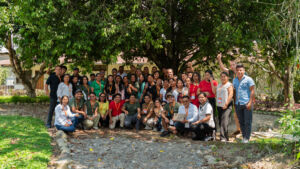
A cacao bean grown in the Ecuadorian Amazon travels thousands of kilometers before reaching a table in Japan. Behind that journey are families who harvest it, organizations that have strengthened their capacities over the years, and a farming tradition closely connected to the forest.
This year, around 8 tons of products from different ALIADOS partners were exported to Japan in a shipment coordinated with the support of the Wiñak Association and made possible through financing from ALIADOS.
The shipment brought together cacao from Wiñak, ASOPROMAS, and ASOPROCANANDÉ; macambo from Canopy Bridge; coffee from Witoca; peanuts from Ally Guayusa; and new samples of cacao paste produced by Wiñak.
More than a single product, the shipment represents an opportunity for different organizations to share the same path towards an international market.
Cacao grown in the Amazon rainforest
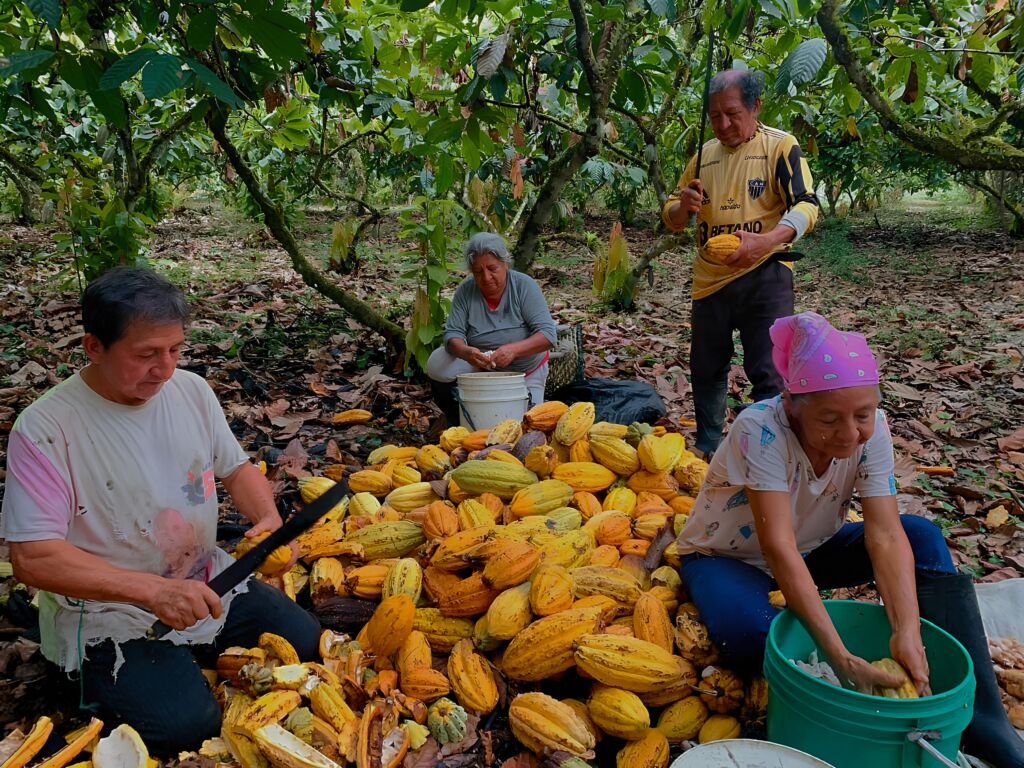
Cacao from an Amazonian chakra in Tena Province.
The cacao that traveled to Japan comes from agroforestry systems such as the Amazonian chakra, an ancestral farming practice in which cacao grows alongside trees, fruits, medicinal plants, and other crops within the primary forest. This diversity allows families to produce food and generate income while preserving practices and knowledge connected to their territories.
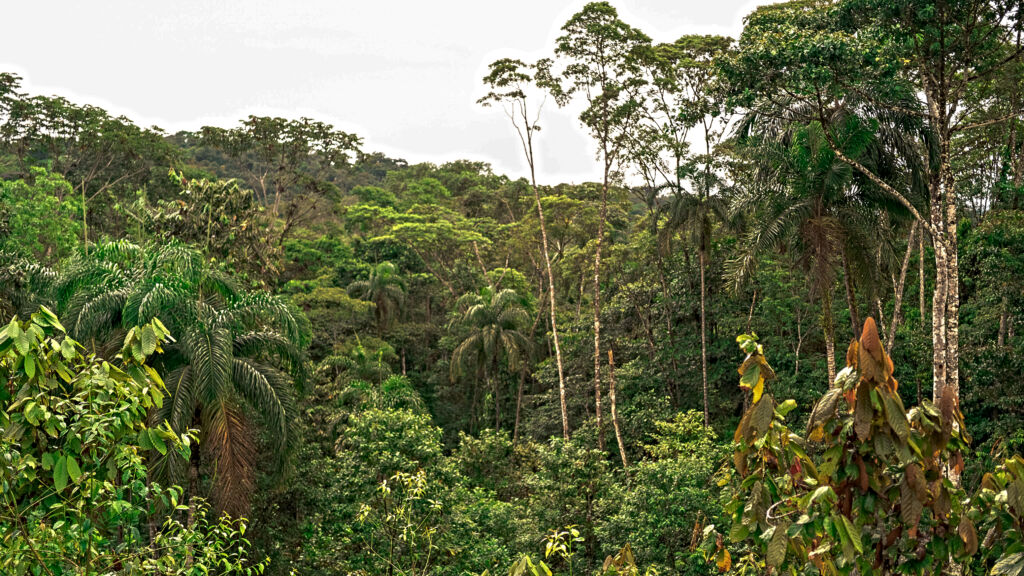
Amazonian chakra in primary forest in Tena Province.
For organizations such as Wiñak, this system also makes it possible to bring high-quality cacao and other Amazonian products to responsible markets without relying on monoculture models.
Each sack that leaves the territory carries more than cacao. It carries the traditions of the communities that grow it and the work of every farmer who nurtures the crop.
Going further together
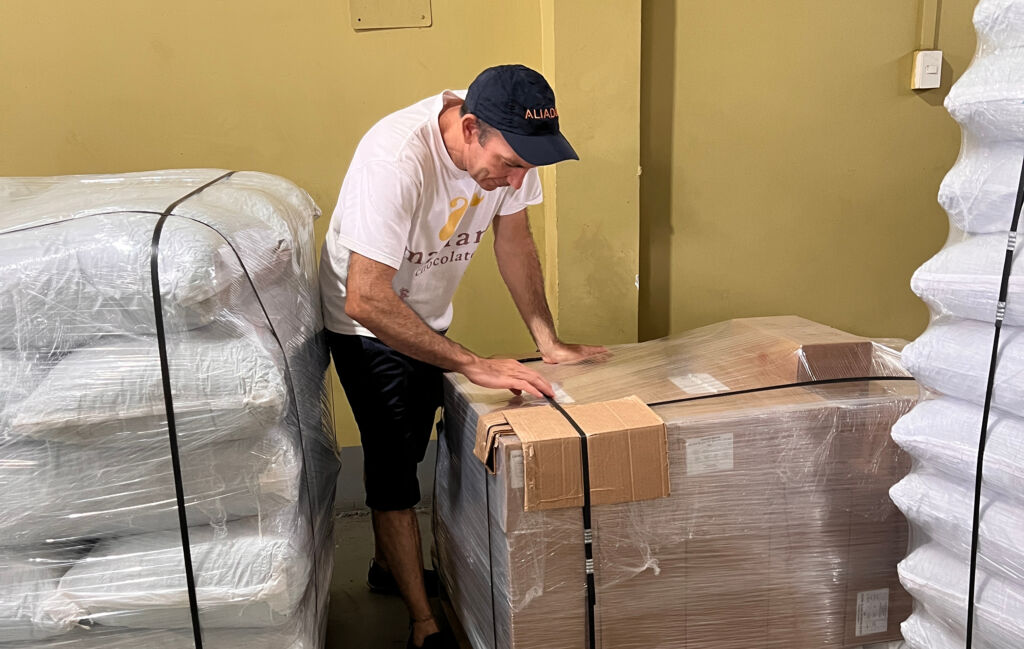
Ulrich Zeibisch, ALIADOS Commercial Advisor, overseeing the export alongside Wiñak.
Accessing an international market requires much more than having a good product. In this process, Wiñak played a central role in coordinating the shipment, bringing together products from different partners to consolidate a joint export. ALIADOS, in turn, provided financing to facilitate the operation and to support a new commercial opportunity.
This type of collaboration allows bio-enterprises with different products, capacities, and production volumes to benefit from opportunities that would be more difficult to access individually.
A journey that is just beginning
The arrival of these products in Japan represents a new step for the organizations within the ALIADOS network and opens opportunities to continue building commercial relationships, increase demand, and connect more products from regenerative systems with international markets.
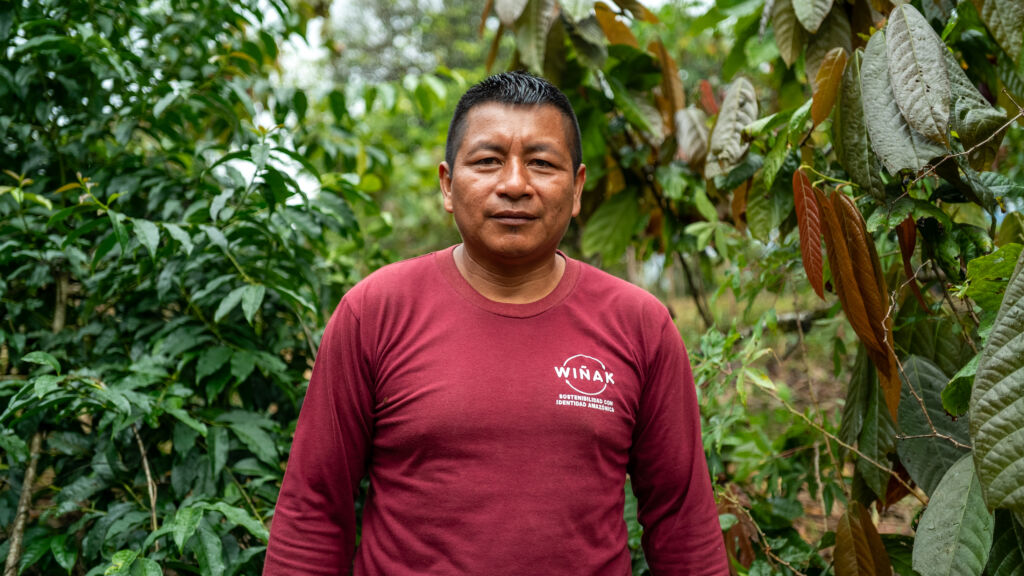
Farmer from the Wiñak Association in his chakra.
Wiñak’s new cacao paste samples are part of this effort to innovate and explore new commercial opportunities by introducing higher value-added products to potential buyers in Japan.
For ALIADOS, strengthening bio-enterprises helps create the enabling conditions by connecting organizations with markets, providing flexible finance, and supporting processes that can turn a commercial opportunity into a long-term relationship.
Because when a product from the chakra reaches a new market, it also carries with it the people, knowledge, and territories that made its journey possible.