The First Regional Gathering of Amazonian Enterprises brought together our partners from the Amazon and other Ecuadorian regions in Ahuano. Together, we shared experiences, challenges, and aspirations, demonstrating the value of collaboration in building a bioeconomy rooted in local territories.
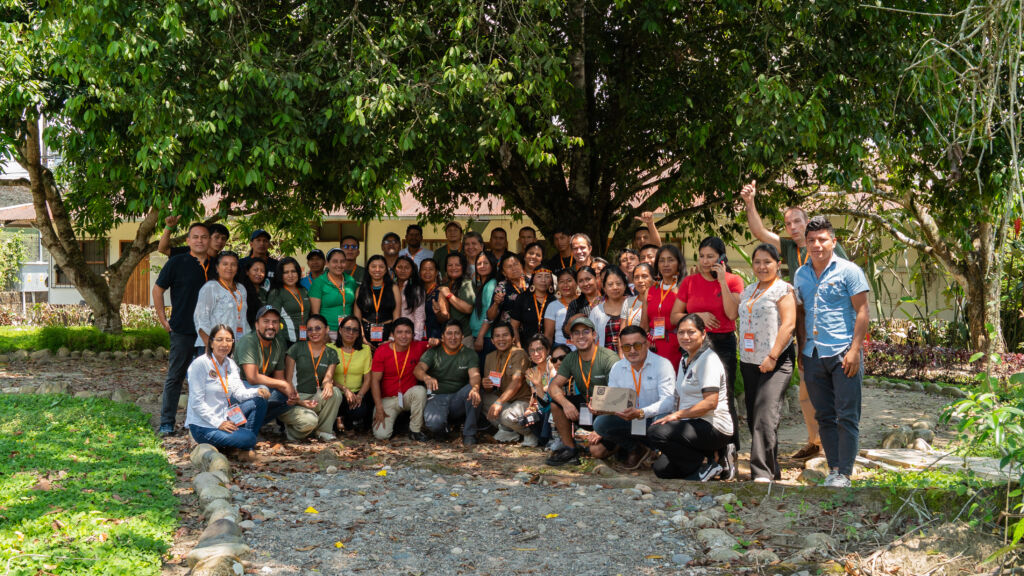
Amazonian entrepreneurs from the ALIADOS network at La Casa del Suizo, in Ahuano, Napo
Behind every Amazonian enterprise lies a community, traditions, and a history of working with and connecting to the land. There are also dreams of growth and of building a future where the development of these enterprises strengthens the very communities that brought them to life.
Carrying these aspirations with them, representatives of enterprises from different regions of Ecuador traveled long distances before arriving by boat at La Casa del Suizo, on the banks of the Napo River in Ahuano. For people working in territories separated by hours of travel, coming together was a special opportunity to meet, build new connections, and design a shared path forward alongside ALIADOS.
Over three days, representatives of Amazonian organizations came together to exchange experiences, recognize their achievements, and explore solutions to the challenges they face in their productive activities.
The gathering highlighted the value of learning from one another. The experiences of those producing coffee, cacao, paiche, and other Amazonian products showed that, although every enterprise has its own story, many of their challenges and aspirations are shared.
The gathering through the words of our Executive Director, Wain Collen.
A space to connect and learn together
Between 2025 and 2026, the ALIADOS Fund disbursed close to USD 400,000 through 21 loans to 11 rural enterprises. Behind these figures are the stories of farmers seeking fair prices for their harvests, associations that require capital investment to continue growing, and families that find new opportunities within their own communities.
As part of the regional AmazonBeEcoinitiative, the gathering provided an opportunity to share progress, recognize ongoing challenges, and discover new ways of learning together.
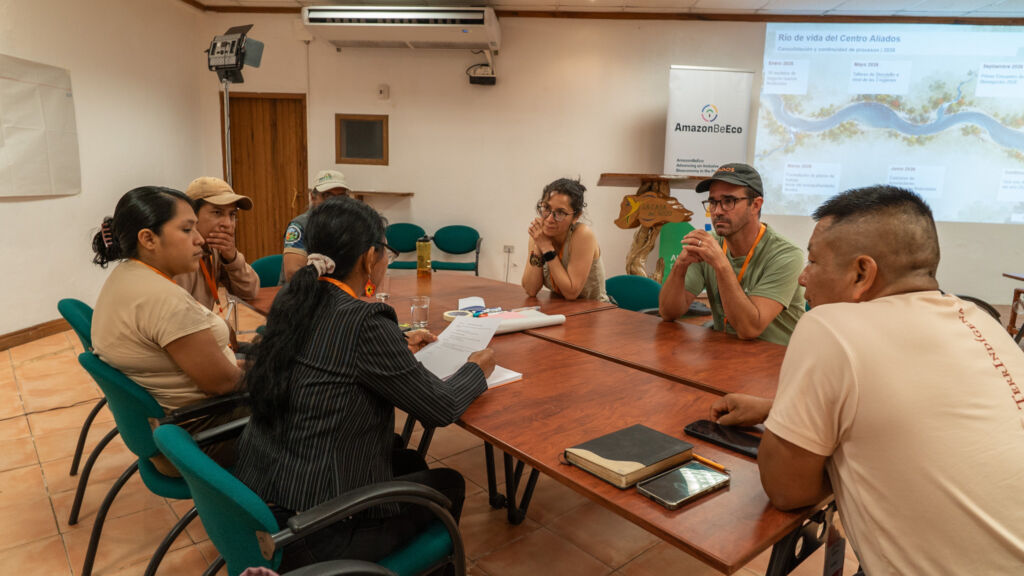
Working session with entrepreneurs from the Andes and the Amazon.
Between 2025 and 2026, the ALIADOS Fund disbursed close to USD 400,000 through 21 loans to 11 rural enterprises. Behind these figures are the stories of farmers seeking fair prices for their harvests, associations that require capital investment to continue growing, and families that find new opportunities within their own communities.
As part of the regional AmazonBeEcoinitiative, the gathering provided an opportunity to share progress, recognize ongoing challenges, and discover new ways of learning together.
Through workshops and group sessions, the organizations shared both their achievements and the difficulties they face. Market access, the availability of working capital, fluctuations in product prices, and stronger internal management emerged as common challenges.
“It was very interesting to engage with representatives from other organizations,” shared Nelson Cerda, a representative of Wiñak, recognizing that despite their different journeys, many associations face similar challenges. These conversations created opportunities to learn from other experiences, develop new knowledge, and identify opportunities for collaboration to strengthen a sustainable economy.
“I think that, more than anything, this helps us feel more secure and supported,” said Nancy Paz, President of ASOPROMAS, reflecting on the opportunity to share challenges and build solutions alongside other associations.
Tools that turn challenges into opportunities
Supporting Amazonian enterprises requires much more than increasing production. It implies strengthening administrative capacities, improving processes, accessing appropriate financing, and building commercial relationships that recognize the value of their products.
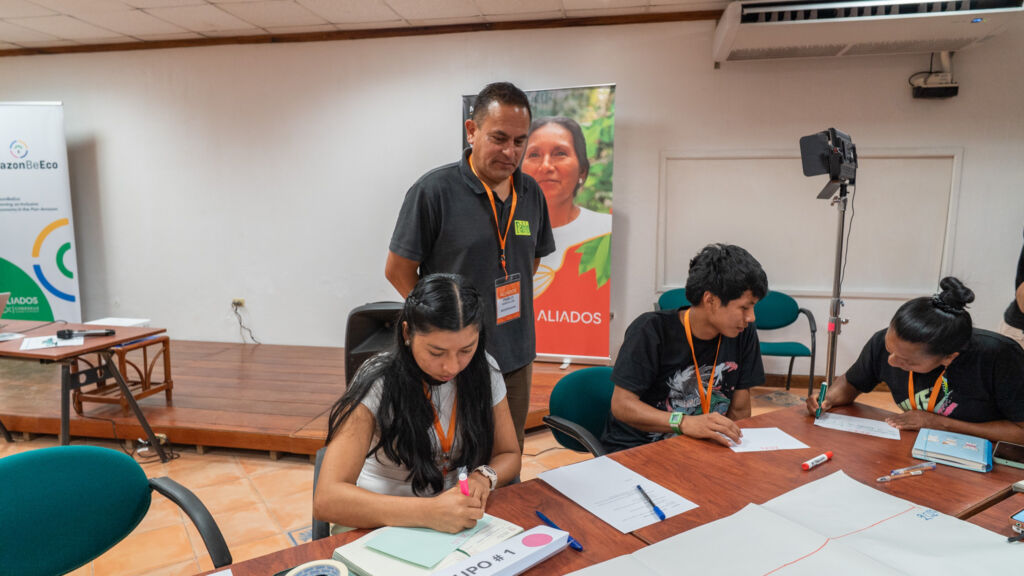
Participatory workshop facilitated by Pablo Santillán.
During the gathering, participants revisited Model C, a planning tool that integrates business development with social and environmental impacts. The organizations reviewed their progress, assessed their needs, and explored how to turn their work plans into increasingly useful tools for decision-making processes.
These conversations also helped ALIADOS recognize the importance of adapting its support tools to each organization's needs, simplifying processes, and strengthening the capacities of those who use them.
Access to financing was another central topic. Through the ALIADOS Fund, organizations can access credit mechanisms tailored to their production cycles while developing the skills needed to strengthen their financial and commercial management.
The experiences shared demonstrated how this support translates into different opportunities.
ASOPROMAS presented its progress in organizing production costs and strengthening its cacao business.
Wiñak shared lessons from its experience in direct exports and working capital management.
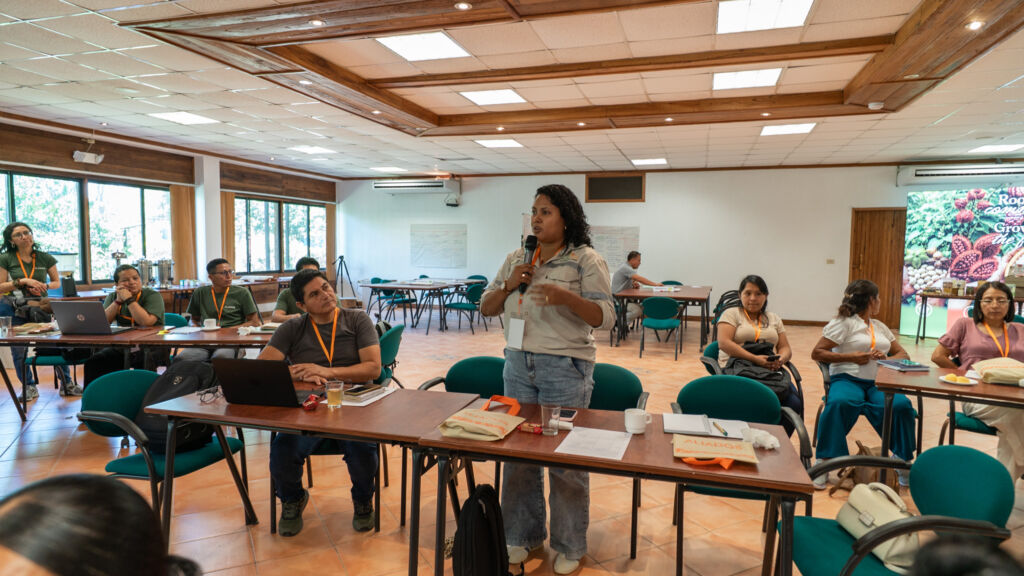
Mónica Valdez, representative of Sacha Ayllu, sharing her experience with the ALIADOS Center.
Meanwhile, Mónica Valdez, from Sacha Ayllu, presented the commercial opportunities identified during her participation in the Americas Food & Beverage Show, in Miami.
In activities such as Amazonian aquaculture, business development involves strengthening capacities throughout the entire value chain.
“The ALIADOS Center has worked with us to strengthen technical and financial management across the entire value chain,” shared Natacha Benítez, a representative of ASOARAPAIMA, referring to their collaborative work in the production and commercialization of paiche and cachama.
ALIADOS' role is to support these processes through technical tools, access to financing, market connections, and opportunities for collaboration, while respecting each organization's priorities and pace of development.
Where learning returns to the land
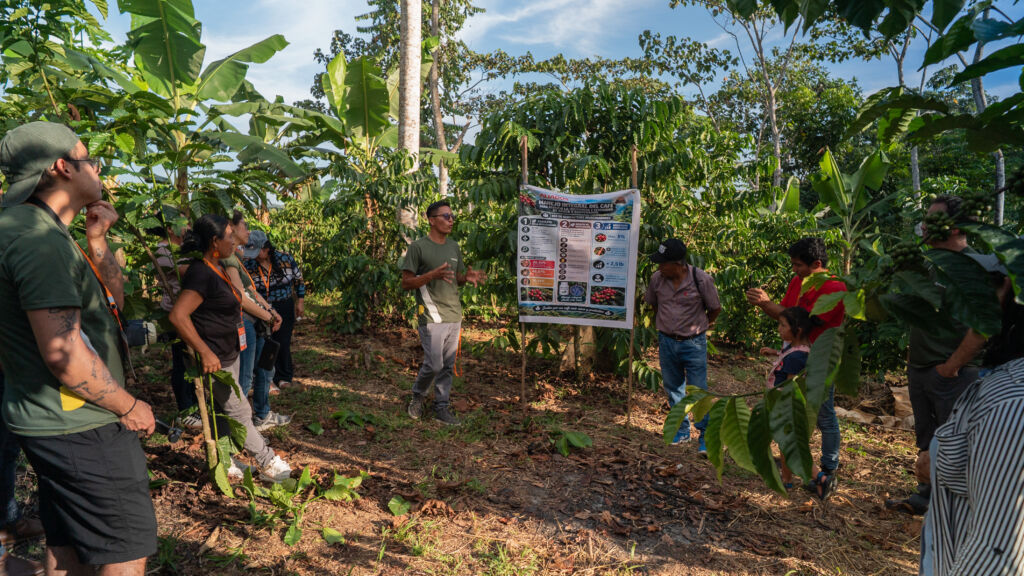
In Ahuano, the gathering also offered an opportunity to experience the work of the Kichwa Artisanal Association Jatary, dedicated to producing and marketing Amazonian coffee.
Field visit to Jatary, where participants learned about the association's challenges and experiences.
The Amazon's humid heat was palpable during the walk through the coffee plot near the river. Coffee plants stretched down the hillside, descending towards the riverbank. Surrounded by the Amazonian landscape, participants had the opportunity to experience firsthand the land where the community grows its coffee.
With support from the ALIADOS Center, the association has worked to reduce losses, improve coffee quality, and strengthen its commercial relationships, showing how innovation can emerge from the needs and capabilities of the organizations themselves.
We keep on growing and building together
The gathering helped identify new priorities for strengthening Amazonian enterprises, from access to markets and financing to capacity building and governance. These challenges are part of a shared journey in which organizations continue creating opportunities within their own territories, with the support of ALIADOS.
Beyond tools and plans, these days reaffirmed the value of a network built on trust and teamwork. A network where each organization contributes its experiences so that everyone can keep growing together.
When enterprises and communities grow together, so do the opportunities to conserve the Amazon for future generations.